
The Bottom Line
- The FTC is scrutinizing subscription funnels on a holistic, end-to-end basis, evaluating everything from upfront advertising, quizzes, personalization claims, pricing displays, and payment overlays to post-purchase upsells and cancellation flows.
- The use of words such as “trial price,” “total due today,” and “$X only” can be problematic – even if technically true – if the material terms of a recurring subscription are not presented equally prominently and conspicuously.
- End-of-funnel disclosures, even if they make all material terms of the subscription clear at the moment consumers decide to pay, may not be a get-out-of-jail-free card if earlier messaging suggests a one-time or otherwise nominal purchase price.
On June 2, 2026, the Federal Trade Commission (FTC) filed a complaint against Genesis Tech-related entities and eight individuals, alleging violations of Section 5 of the FTC Act and the Restore Online Shoppers’ Confidence Act (ROSCA). At the FTC’s request, a federal court issued a temporary restraining order halting the alleged scheme.
The complaint targets a portfolio of online subscription products – including Wisey, PDF Guru/PDF Master, Lumi, Nebula, and MadMuscles/Harna/Unimeal – and alleges a common playbook: lure consumers with a free or low-cost offer, build commitment through quizzes or personalization, obscure auto-renewal terms, impose unexpected recurring charges, and make cancellation difficult.
“Net Impression” Across the Consumer Journey
The “net impression” of an advertisement has long been the standard for evaluating whether advertising messages within the four corners of an advertisement are misleading to a reasonable consumer. The FTC is expressly applying that theory to end-to-end consumer journey funnels, not just individual advertisements. The complaint alleges that the defendants repeatedly framed offers as free, nominal, personalized, or limited-term purchases while placing recurring-subscription terms in fine print, either further down the funnel after consumer engagement, or otherwise separated from the payment moment.
Notably, the complaint is not limited to missing disclosures. Rather, the FTC alleges that the overall user experience created a misleading impression of a one-time or limited-term purchase. That distinction matters because a technically present disclosure may still be insufficient if it is small, low-contrast, below the fold, omitted from the payment overlay, or inconsistent with the more prominent pricing message.
Key Risk Themes for Subscription Businesses
1. The FTC Examines the Entire Consumer Funnel; Fine Print That Contradicts the Main Message Is Inadequate
The complaint repeatedly describes pre-checkout engagement, such as quizzes, personalization claims, progress bars, uploaded documents, and countdown timers, as integral parts of the various allegedly deceptive consumer flows and part of the overall message. A compliant disclosure at checkout may not cure earlier representations that strongly suggest a one-time, task-based, or limited-use purchase.
The complaint also challenges subscription disclosures that appeared in small, gray, or low-contrast text that contradict the more prominently displayed pricing language.
2. Language Implying One-Time Fees Carries Heightened Risk
The complaint specifically targets pricing language such as “Total: $19.99,” “Total due today: $1.99,” and “You will be charged only $5.” The FTC’s theory is that “today” or “only” language reinforces a one-time-payment impression unless paired with a clear, unavoidable statement of the recurring charge amount, renewal frequency, and cancellation deadline.
For example, the FTC alleged that the fine print contradicted earlier representations by PDF Guru that the consumer would pay only a nominal one-time fee to download a single document. PDF Guru’s payment page also allegedly emphasized “Total due today: $1.99” while subscription language appeared in less prominent text.
Similarly, the FTC alleged that the company Nebula’s use of language such as “choose a trial price” and “Personalized reading for $5” reinforced a one-off purchase impression while hiding the $45 every-30-days subscription in fine print.
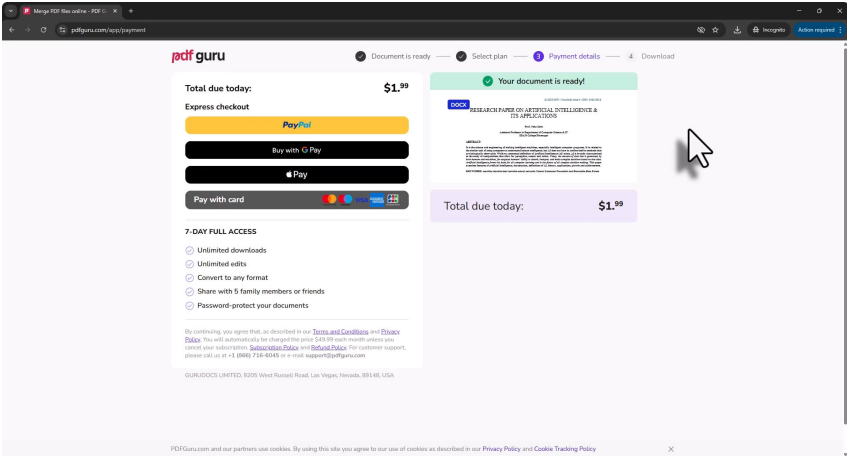
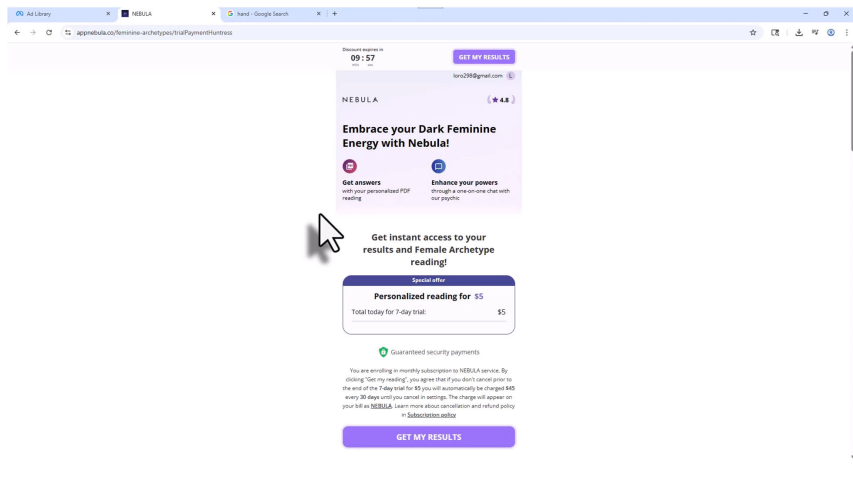
Companies advertising a one-time “join fee,” “trial fee,” or “download fee” are at higher risk of scrutiny. This is especially true where the surrounding design, pricing language, call-to-action, or checkout flow could reasonably lead consumers to believe the charge is a standalone payment rather than the start of an auto-renewing plan.
3. Cancellation Friction Is an Independent Enforcement Ground
The complaint separately alleges ROSCA violations based on missing or nonfunctional cancellation options, unresponsive customer support, requests to justify cancellation, and continued billing after cancellation assurances. As evidenced in several prior FTC cases (most recently against Shutterstock for a $35 million settlement), ROSCA requires that businesses provide simple mechanisms to stop recurring charges.
4. Post-Purchase Upsells Using Stored Payment Credentials Face Scrutiny
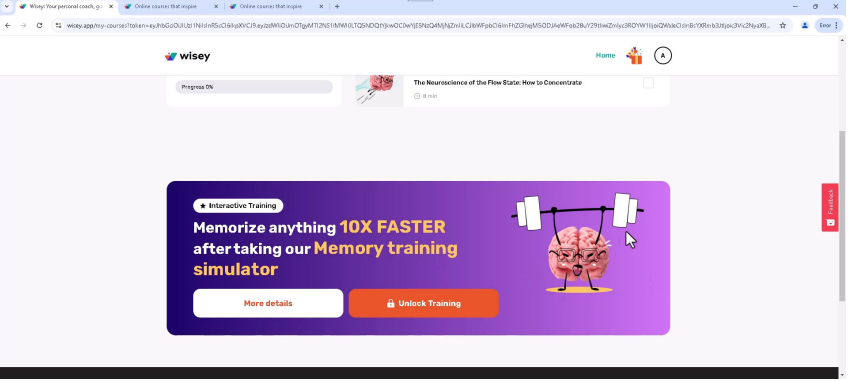
The FTC alleges that upsells leveraging stored billing information were made to look like confirmation steps or free add-ons, with prominent “add” buttons and hard-to-find close controls. For example, the complaint argues that the company Wisey charged consumers who clicked “Unlock Training” for another fee without their knowledge or consent.
Businesses should treat each upsell as a separate transaction requiring clear pricing disclosure, renewal terms, and consent before charge.
5. Multi-Entity Structures Can Become Aggravating Facts
The FTC also alleges that Genesis Tech publicly described itself as an “ecosystem of product IT companies” and a “co-founder” of multiple technology startups, but that in practice it provided subsidiaries with a consistent blueprint for deceptive subscriptions and unauthorized billing.
The FTC further alleges that the Genesis Tech network used multiple Cyprus subsidiaries and Delaware counterparts to launch new offerings, register new corporate identities, open new merchant accounts, and avoid fraud monitoring – while sharing common ownership, officers, and practices. Multi-entity structures may increase enforcement risk when they obscure the identity of the seller or the entity responsible for fulfilling cancellations.
What Subscription-Based Businesses Should Do Now
Subscription, app, and digital-product businesses should use this enforcement action as an opportunity to audit their onboarding flows in anticipation of a wave of expected FTC enforcement. In particular:
- Review pricing pages, payment descriptors, and call-to-action language for any framing that could create a standalone-payment impression inconsistent with an auto-renewal obligation.
- Confirm that subscription disclosures are clear and conspicuous and understandable throughout the consumer funnel, and affirmatively consented to before collecting the consumer’s billing information.
- Test cancellation paths to confirm they are simple, functional, and accessible.
- Evaluate post-purchase upsell flows for potential “dark patterns” and the potential to lure consumers into unexpected charges.